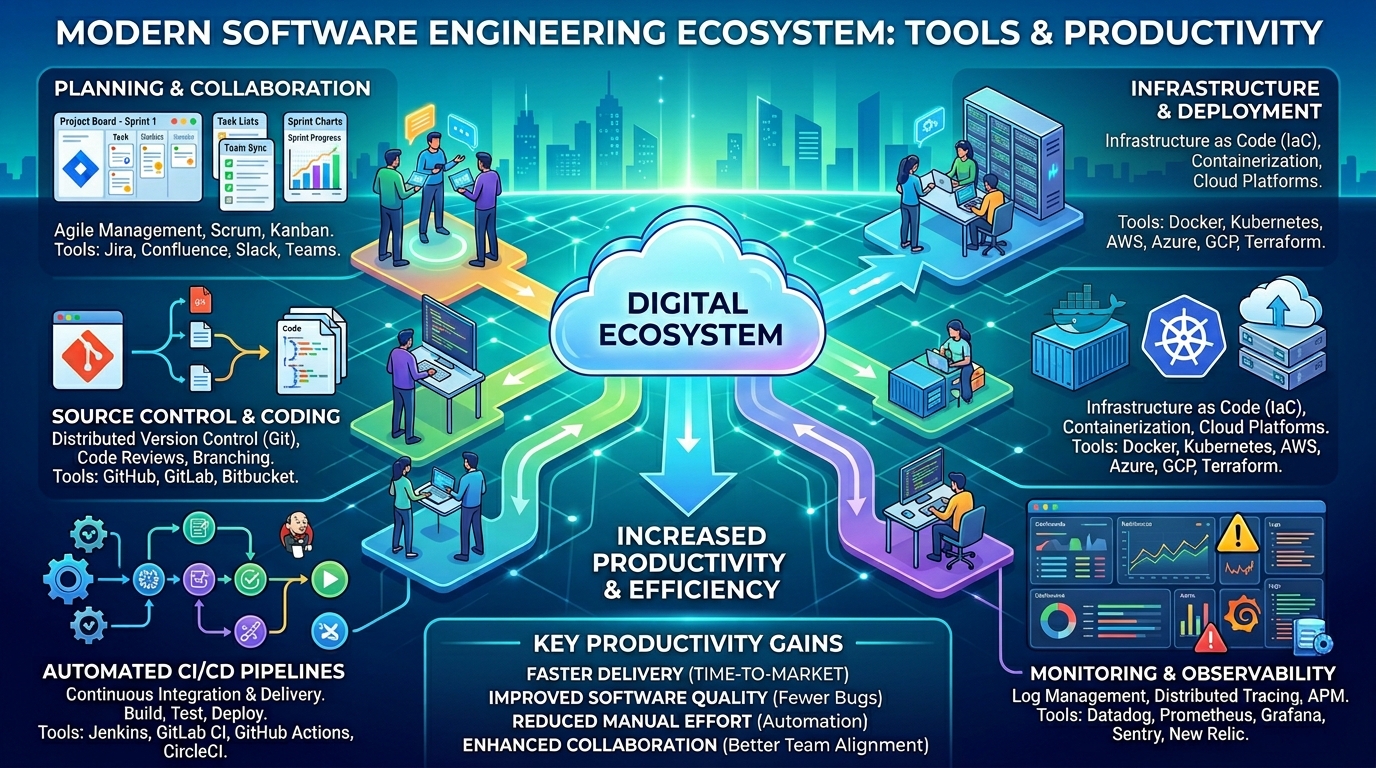

Modern software engineering depends heavily on tools that improve productivity, streamline workflows, and reduce operational complexity. These tools are not just supporting components, they are essential parts of the development lifecycle. From writing code to deploying applications and monitoring systems, engineering tools help teams work faster, collaborate efficiently, and maintain high-quality software in production environments.
Version Control Systems and Collaborative Development
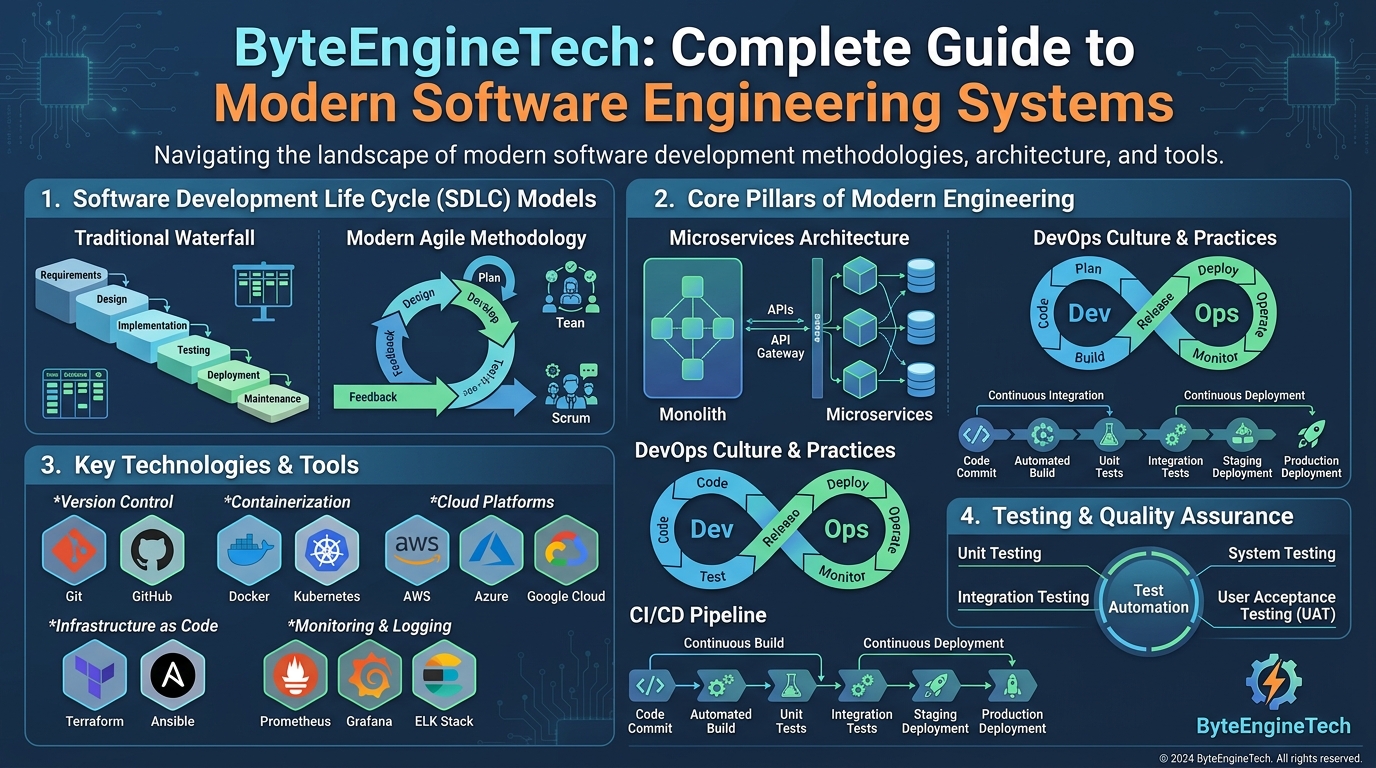
Version control systems are the foundation of collaborative software development. They allow multiple developers to work on the same codebase without conflicts by tracking every change made to the system. This ensures that development history is preserved and any change can be reviewed or reverted when needed.
These systems also improve collaboration by enabling branching strategies where teams can work on new features independently. Once the feature is stable, it is merged into the main codebase. This structured workflow reduces errors and ensures smooth integration of new updates into production systems.
Cloud Platforms and Scalable Infrastructure
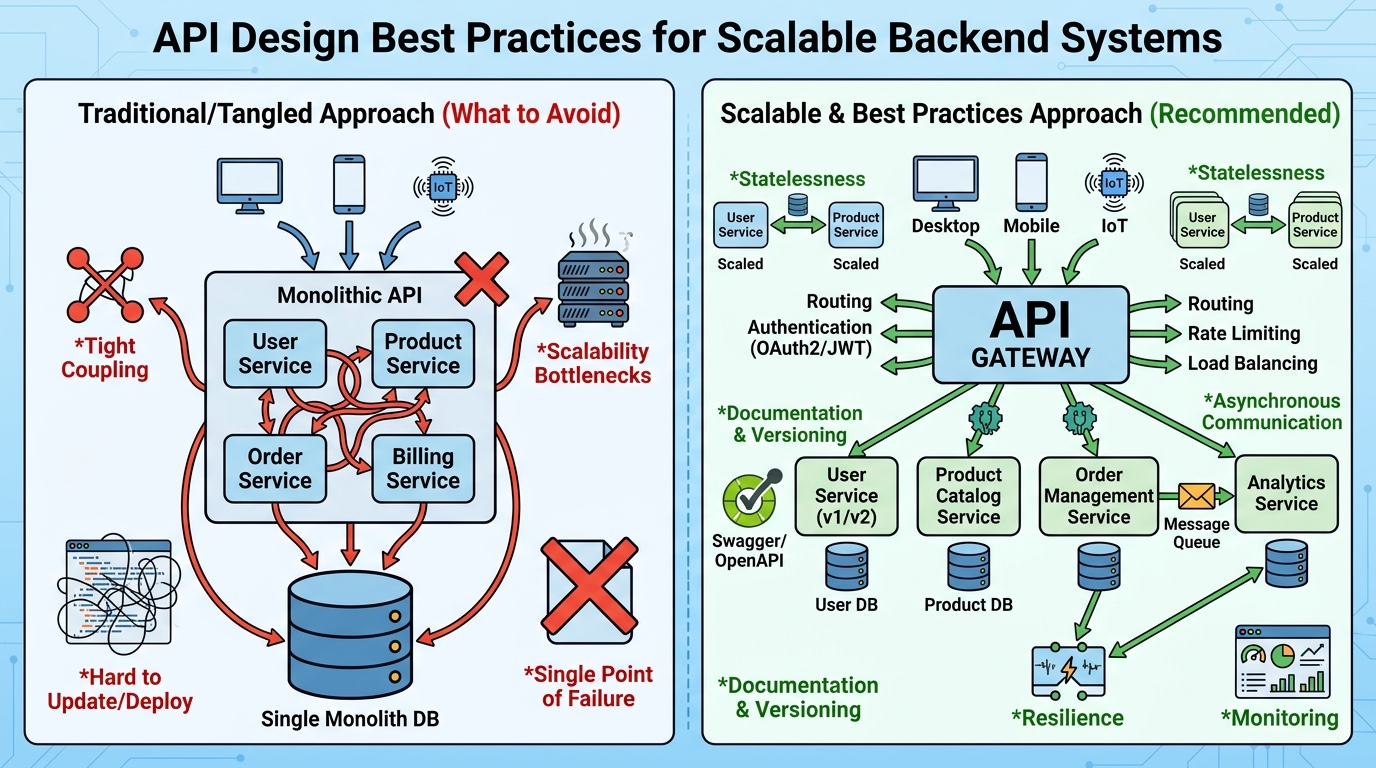
Cloud platforms have transformed how modern applications are deployed and managed. Instead of relying on physical servers, developers can use cloud services to host applications, databases, and storage systems. This makes infrastructure more flexible, scalable, and cost-efficient.
Cloud systems also allow automatic scaling based on traffic demand. When user load increases, additional resources are allocated automatically, and when demand decreases, resources are reduced. This ensures optimal performance while controlling operational costs in real-time environments.
CI CD Tools and Deployment Efficiency
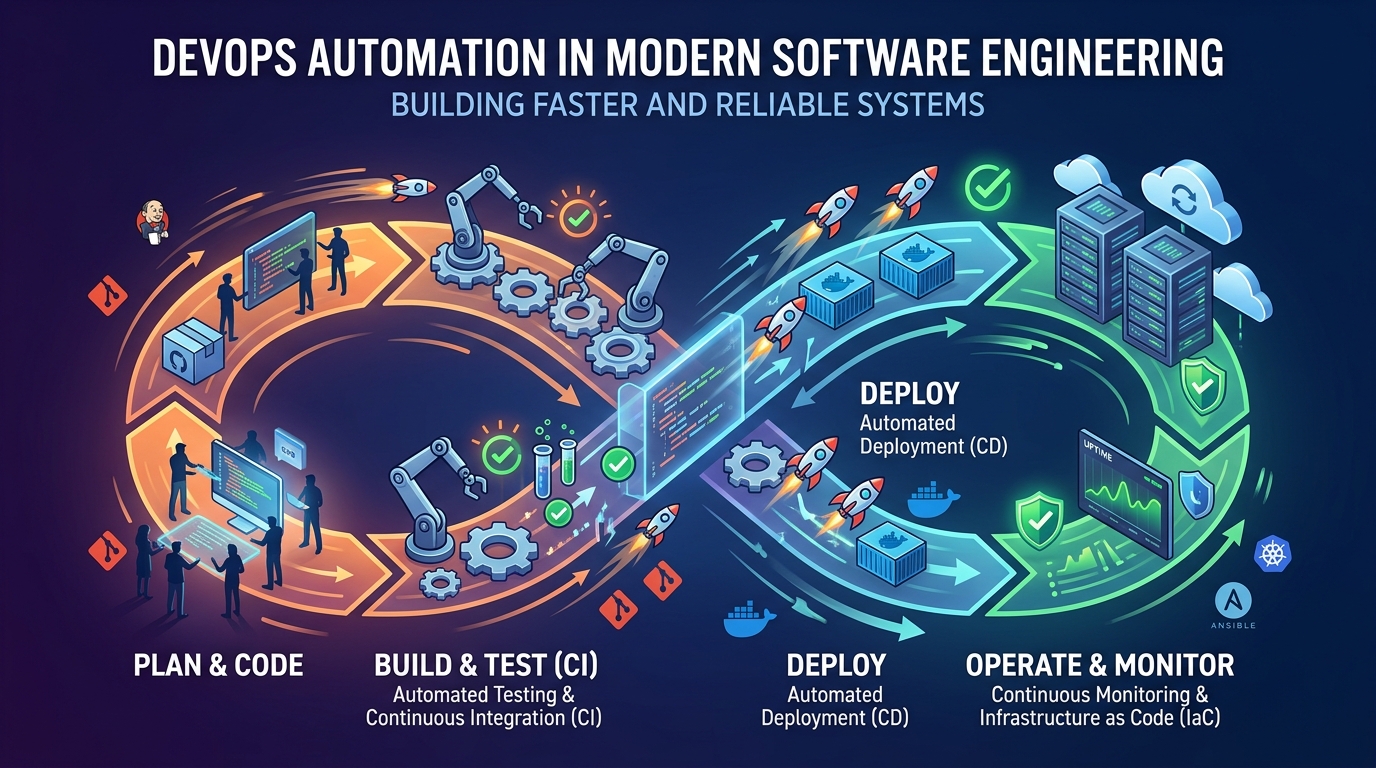
CI CD tools automate the process of building, testing, and deploying applications. Continuous integration ensures that every code change is tested automatically, while continuous deployment allows successful changes to be released into production without manual steps.
These tools reduce deployment time and eliminate human errors during release cycles. They also ensure that software is always in a deployable state, allowing teams to deliver features faster and maintain consistent system stability across environments.
Monitoring, Logging, and System Visibility
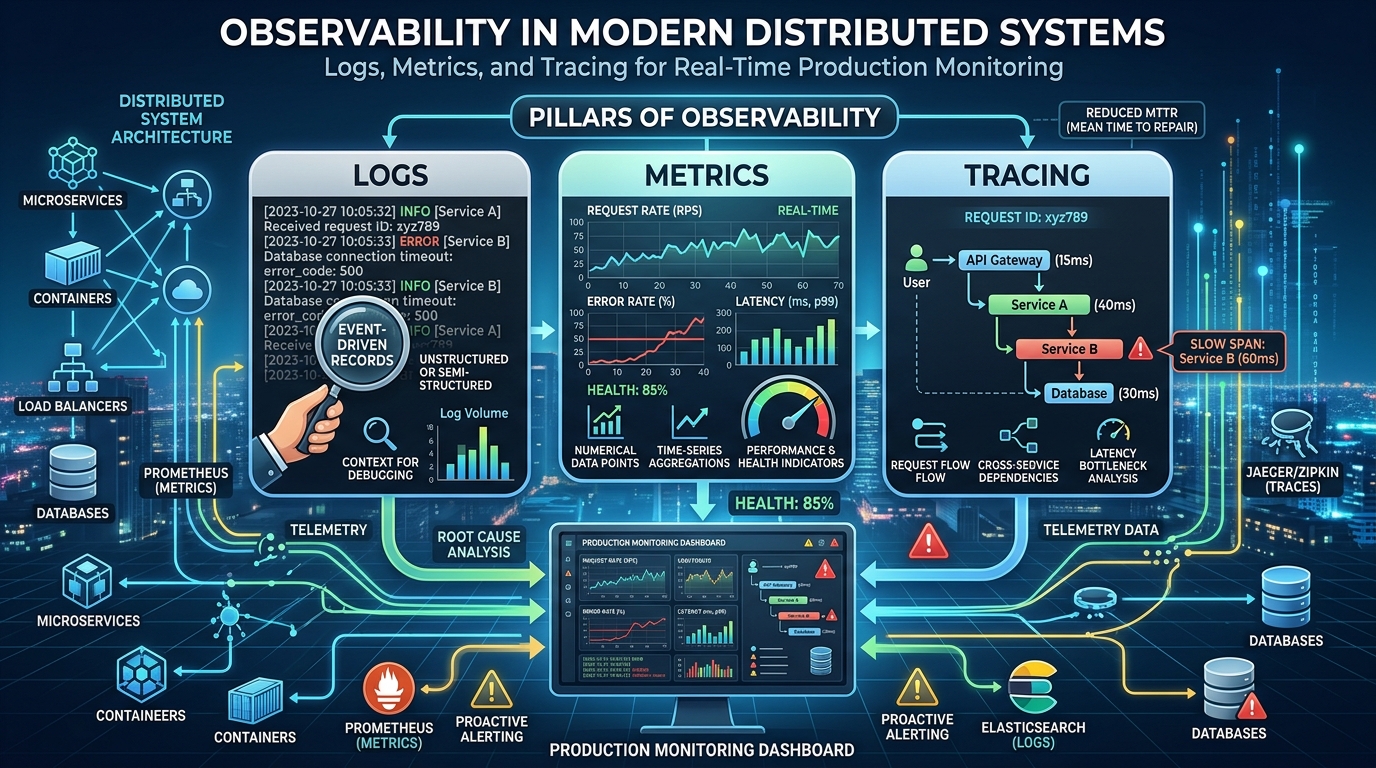
Monitoring tools play a critical role in maintaining system health by tracking performance metrics, error rates, and system behavior in real time. These tools help engineers detect issues before they impact users and ensure continuous system reliability.
Logging systems provide detailed records of application events, which are essential for debugging and troubleshooting. Combined with monitoring, they give full visibility into system performance and help engineers quickly identify and resolve issues in complex distributed environments.
Frequently Asked Questions
What are software engineering tools
These are applications and systems that help developers build, test, deploy, and manage software more efficiently.
Why is version control important
It allows teams to track code changes, collaborate safely, and maintain development history.
What is cloud computing in software engineering
It is the use of remote servers to host and manage applications instead of physical infrastructure.
What are CI CD tools used for
They automate the process of testing and deploying software to improve speed and reliability.
Why is monitoring important in systems
It helps detect performance issues, track system health, and ensure application stability.
Conclusion
Tools and productivity systems are a critical part of modern software engineering because they streamline workflows and improve development efficiency. From version control to cloud infrastructure, CI CD pipelines, and monitoring systems, these tools enable teams to build scalable, reliable, and high-performance applications. As systems continue to grow in complexity, these productivity tools become essential for maintaining speed, stability, and operational excellence.