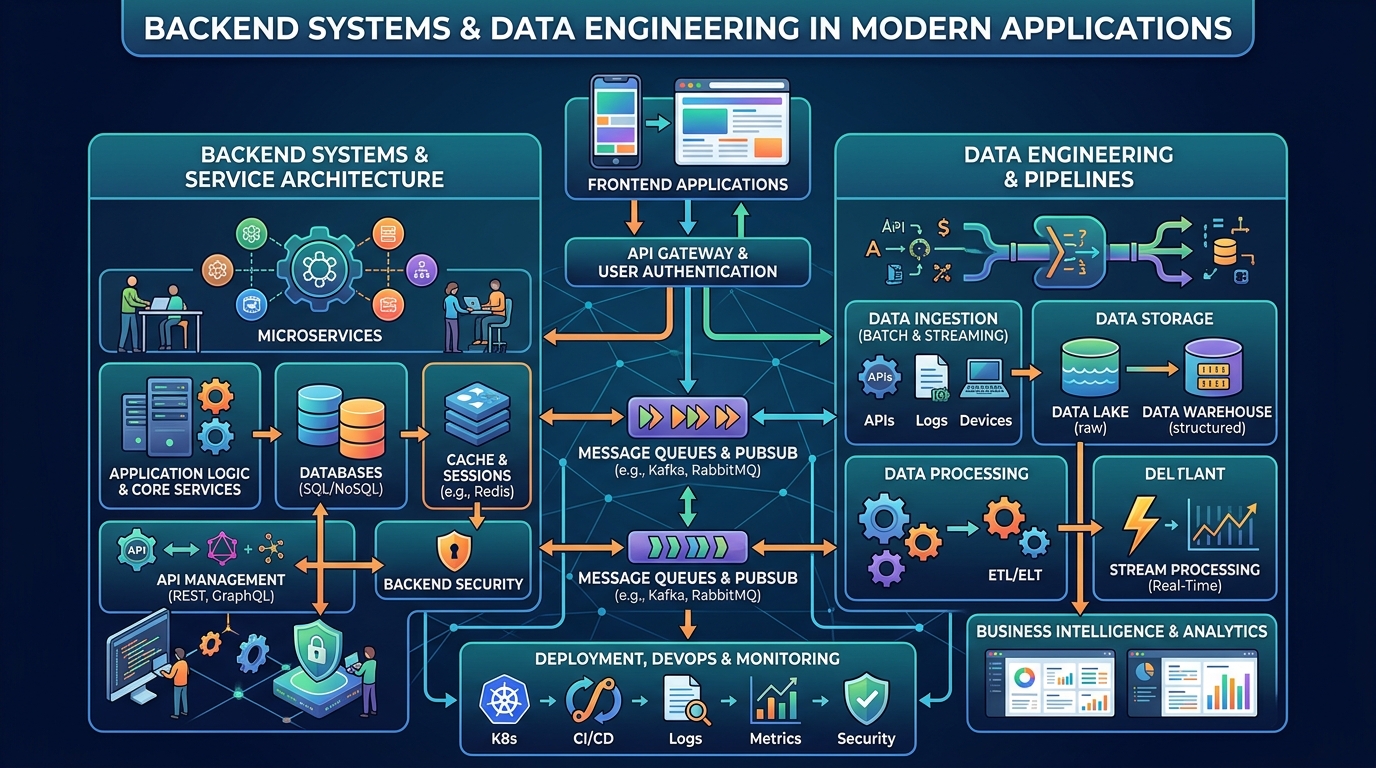

Backend systems and data engineering form the core foundation of every modern software application. While users interact with the frontend, all processing, logic execution, and data management happen on the backend. These systems are responsible for handling requests, processing business rules, managing databases, and ensuring that applications run smoothly under all conditions. In large-scale production environments, backend architecture plays a critical role in determining performance, reliability, and scalability.
Request Handling and API Layer Design
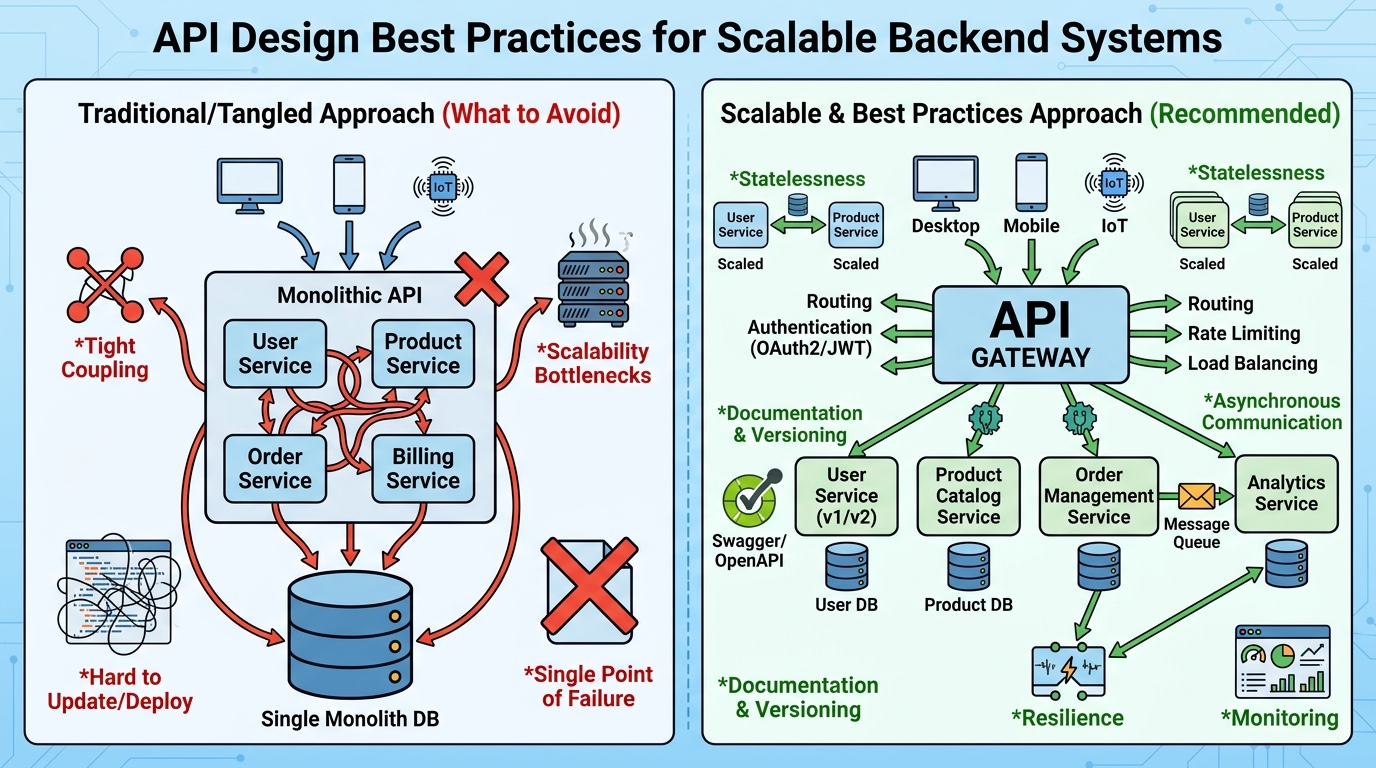
Backend systems are built around request handling mechanisms where user actions are converted into structured API calls. These APIs act as communication bridges between frontend applications and backend services. A well-designed API layer ensures that requests are processed efficiently and responses are delivered quickly without delays.
API design also focuses on consistency, security, and scalability. Engineers define clear endpoints, validation rules, and authentication layers to ensure safe communication between systems. This structure allows multiple clients such as web, mobile, and third-party applications to interact with the same backend efficiently.
Database Systems and Data Storage Models
Databases are the backbone of backend systems because they store all application data in structured or unstructured formats. Relational databases manage structured data using tables, while NoSQL systems handle flexible and large-scale datasets. Choosing the right database model is essential for performance and scalability.
Data storage systems also focus on indexing, replication, and partitioning to improve speed and reliability. These techniques ensure that even large datasets can be accessed quickly. Proper database design reduces query time and improves the overall efficiency of the application.
Caching Strategies and Performance Optimization
Caching is a key technique used in backend systems to improve performance by storing frequently accessed data in fast-access memory layers. This reduces the load on databases and speeds up response times for users. Common caching systems are used to store session data, API responses, and frequently requested information.
Performance optimization also includes reducing unnecessary database calls, optimizing queries, and using asynchronous processing. These improvements help systems handle high traffic efficiently while maintaining low latency and smooth user experience.
Scalability in Backend Architecture
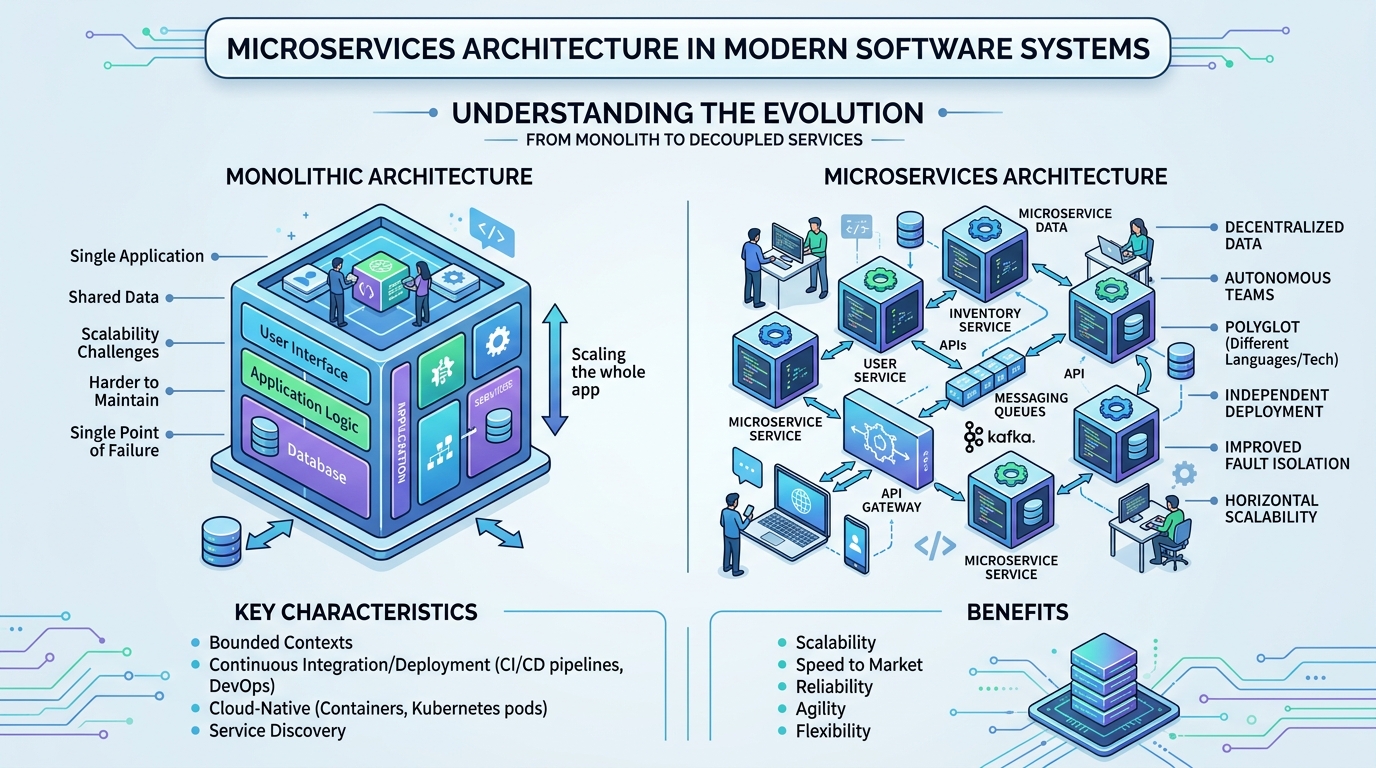
Scalability is one of the most important goals in backend engineering. Systems must be designed to handle increasing numbers of users and growing data without performance degradation. This is achieved through techniques like horizontal scaling, load balancing, and microservices architecture.
Microservices break applications into smaller independent services that can be scaled separately. This makes it easier to handle traffic spikes and allows teams to update individual services without affecting the entire system. Scalability ensures long-term system growth and stability.
Frequently Asked Questions
What is backend in software engineering
Backend refers to the server-side part of an application that handles logic, processing, and data management.
What is an API in backend systems
An API is a communication interface that allows frontend applications to interact with backend services.
Why are databases important
Databases store and manage application data, making it accessible, structured, and secure for processing.
What is caching in backend systems
Caching is a technique used to store frequently accessed data in fast memory to improve performance.
How do backend systems scale
They scale using techniques like load balancing, microservices, and distributed architecture.
Conclusion
Backend systems and data engineering are essential components of modern software applications because they handle all core processing and data management tasks. Through APIs, databases, caching, and scalable architecture, backend systems ensure that applications remain fast, reliable, and efficient even under heavy usage. Strong backend design is the foundation of every successful large-scale digital system.