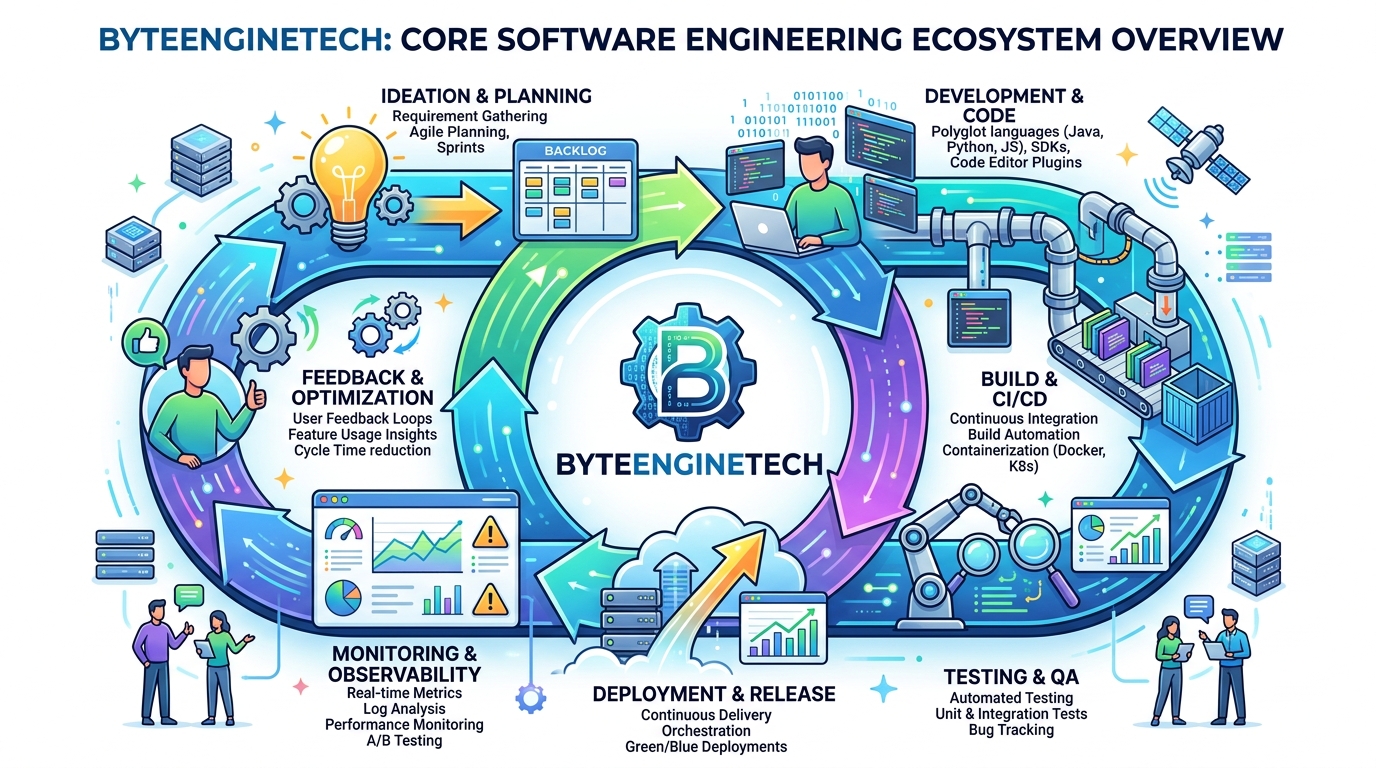

ByteEngineTech is a software engineering knowledge platform focused on explaining how modern digital systems are designed, built, deployed, and maintained in real production environments. The website is structured around practical engineering domains that reflect how real tech companies operate today. Instead of isolated theory, it focuses on end-to-end system thinking where architecture, deployment, backend logic, and developer efficiency all work together as a unified ecosystem.
System De
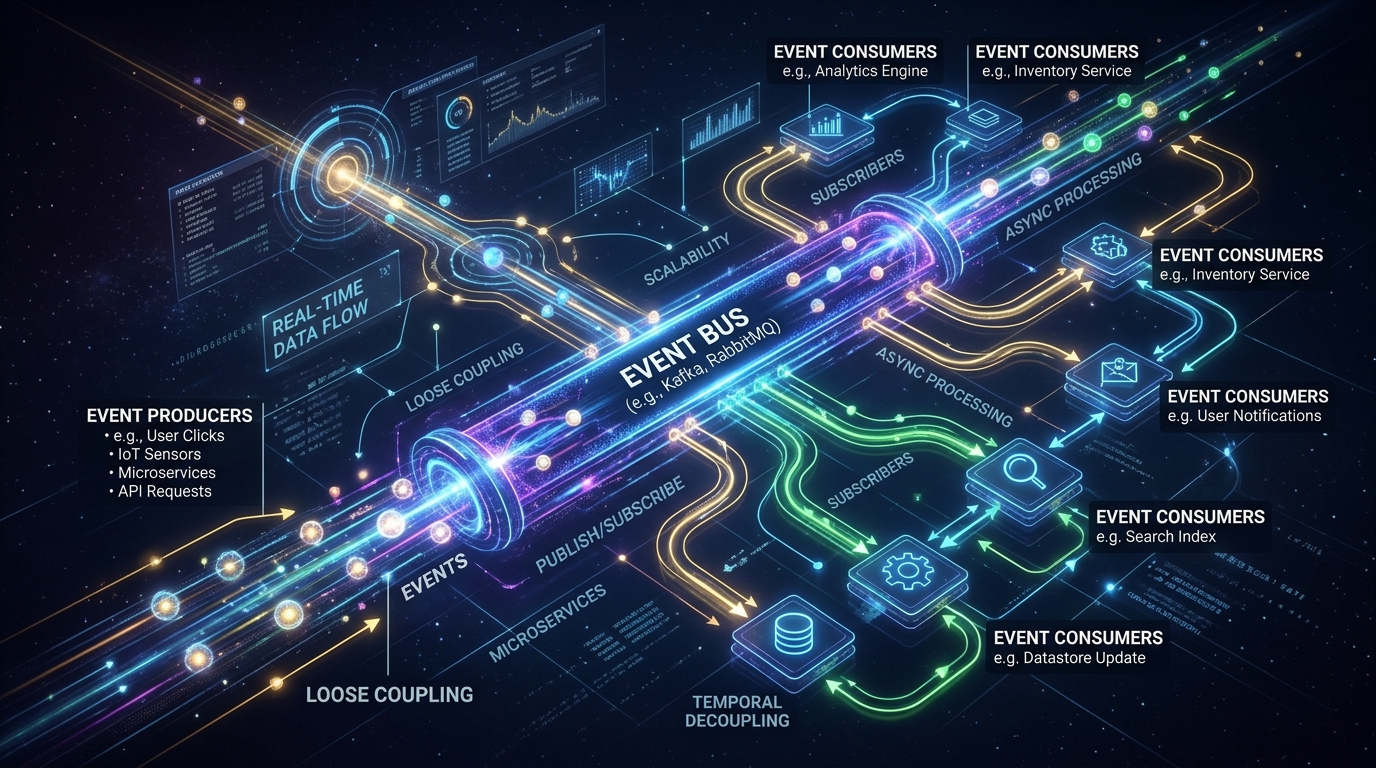
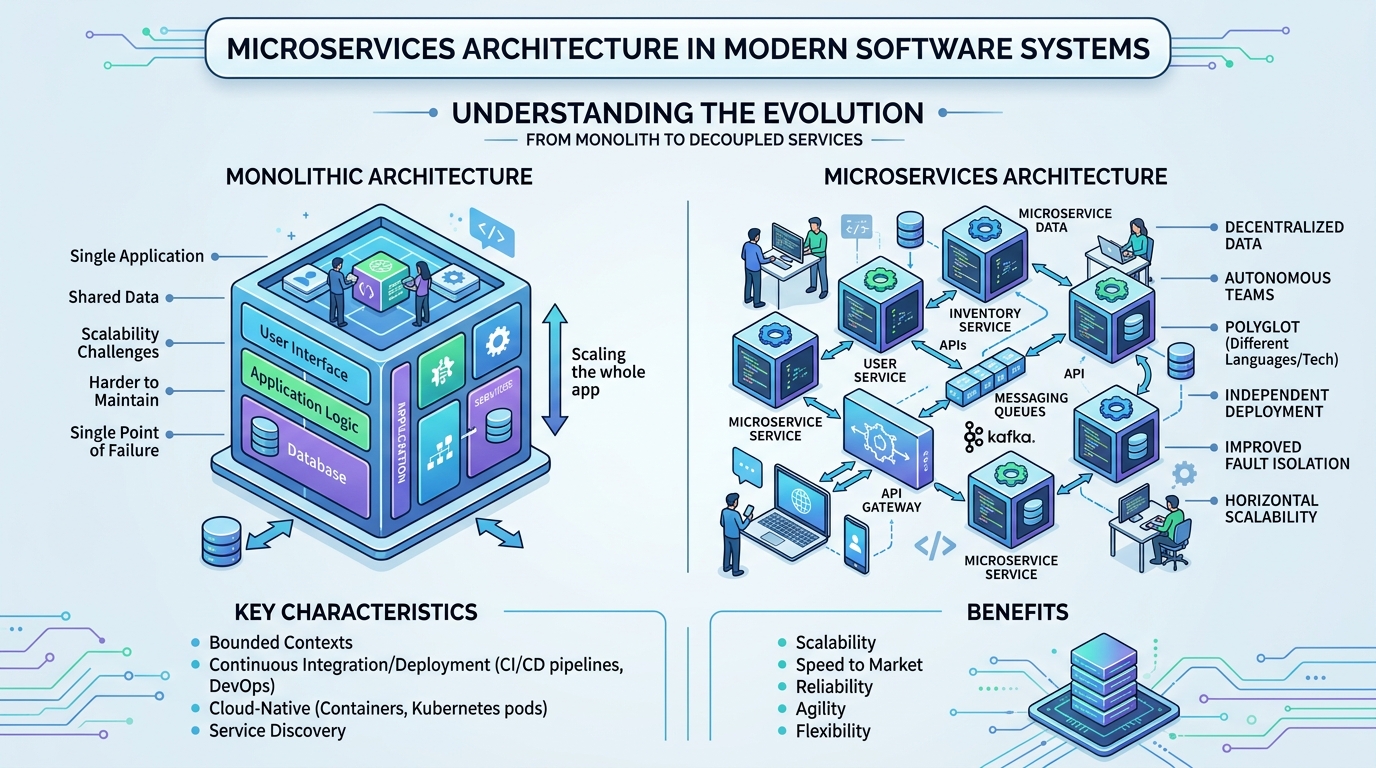
System design represents the structural foundation of scalable applications where engineering decisions define how systems behave under real-world conditions. It focuses on designing architectures that can handle high traffic, large datasets, and continuous user growth without performance breakdowns. Core principles include modular design, distributed systems, caching strategies, and load distribution techniques that ensure stability and efficiency.
In production environments, system design is critical because it determines how well an application scales as demand increases. Engineers use patterns like microservices and fault-tolerant architecture to ensure reliability even when parts of the system fail. A strong system design mindset helps developers move beyond coding and think at the level of infrastructure and long-term system behavior.
DevOps & Automation
DevOps & Automation is the engineering approach that connects software development with system operations to create faster, more reliable delivery pipelines. It focuses on continuous integration and continuous deployment workflows where code is automatically tested, built, and released into production environments. This eliminates manual intervention and reduces deployment errors significantly.
Automation plays a central role in modern DevOps practices by handling repetitive tasks such as testing, infrastructure provisioning, and deployment management. This allows teams to release software faster while maintaining stability and consistency. In large-scale systems, DevOps ensures smooth collaboration between development teams and infrastructure systems, improving both speed and reliability of software delivery.
Backend & Data Systems
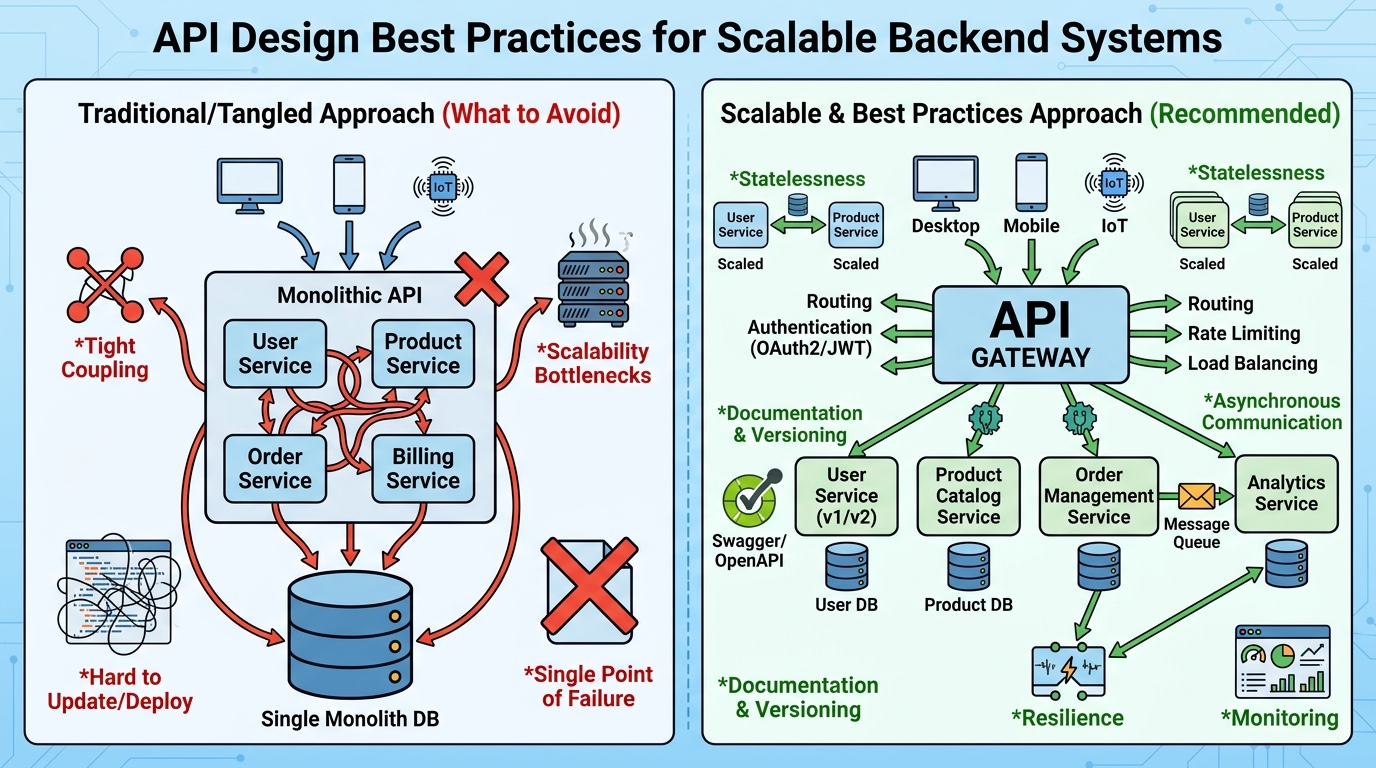
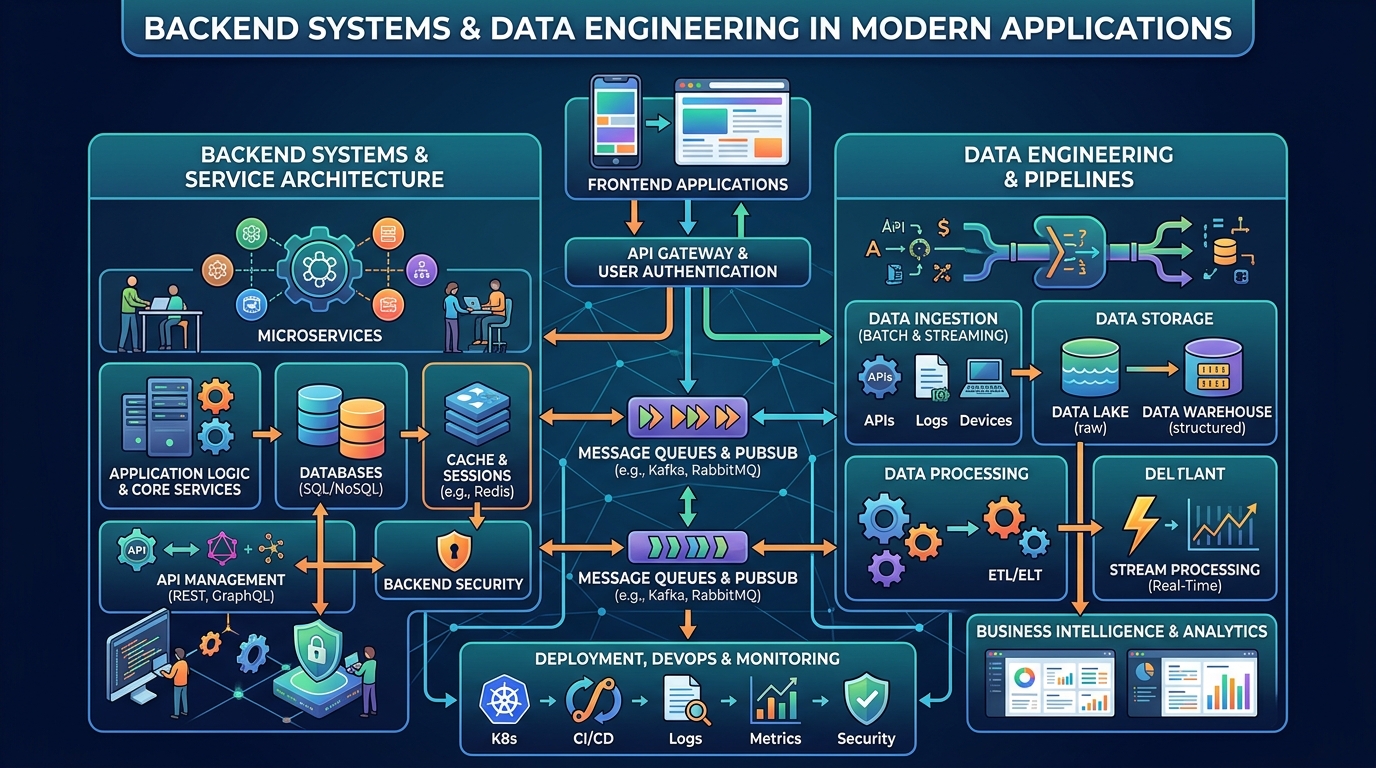
Backend & Data Systems form the core engine of every application, handling business logic, data processing, and system communication. The backend manages how requests are processed, how APIs respond, and how authentication and security are enforced. It ensures that the application functions correctly behind the user interface while maintaining performance and reliability.
Data systems are responsible for storing, organizing, and retrieving information efficiently across large-scale environments. Modern applications depend on optimized databases, caching layers, and distributed storage systems to handle massive amounts of data. A well-designed backend and data system ensures fast response times, high availability, and smooth user experiences even under heavy workloads.
Tools & Productivity
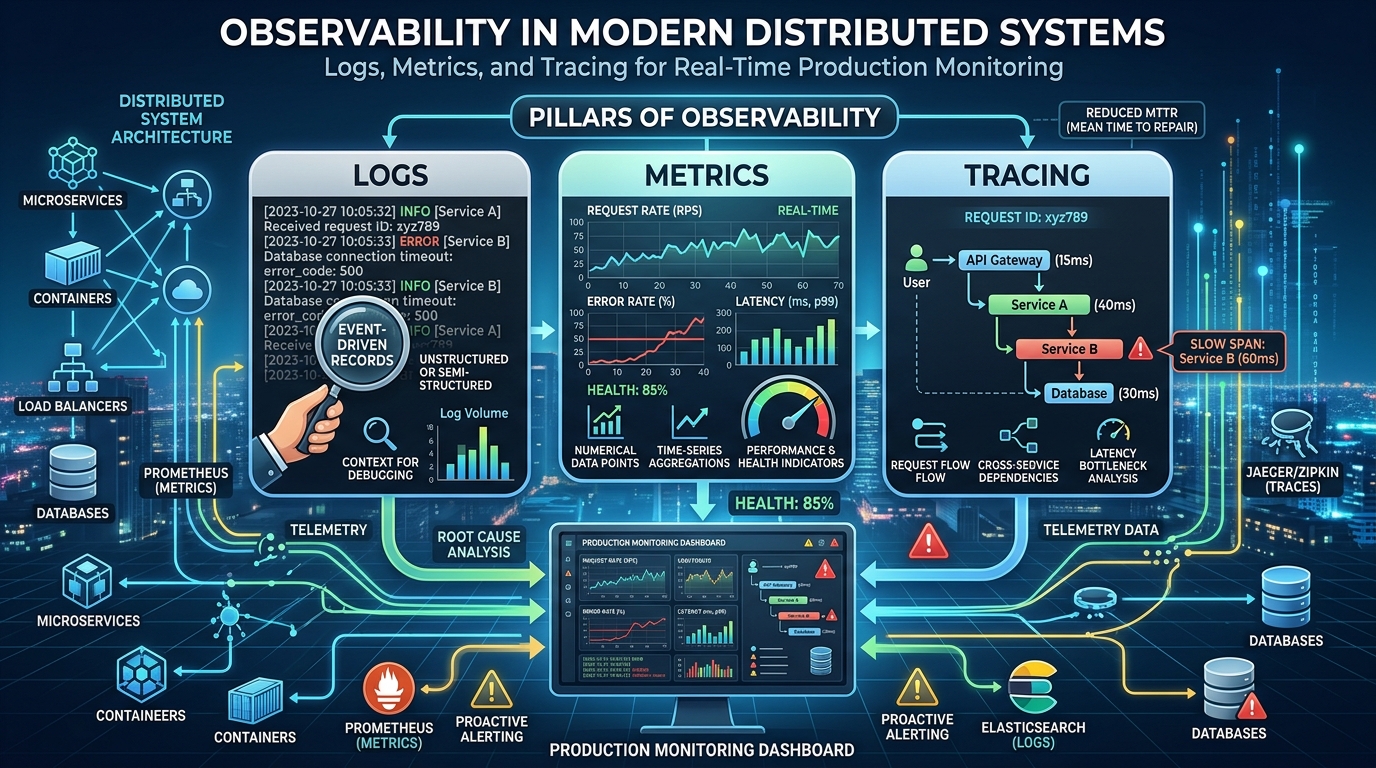
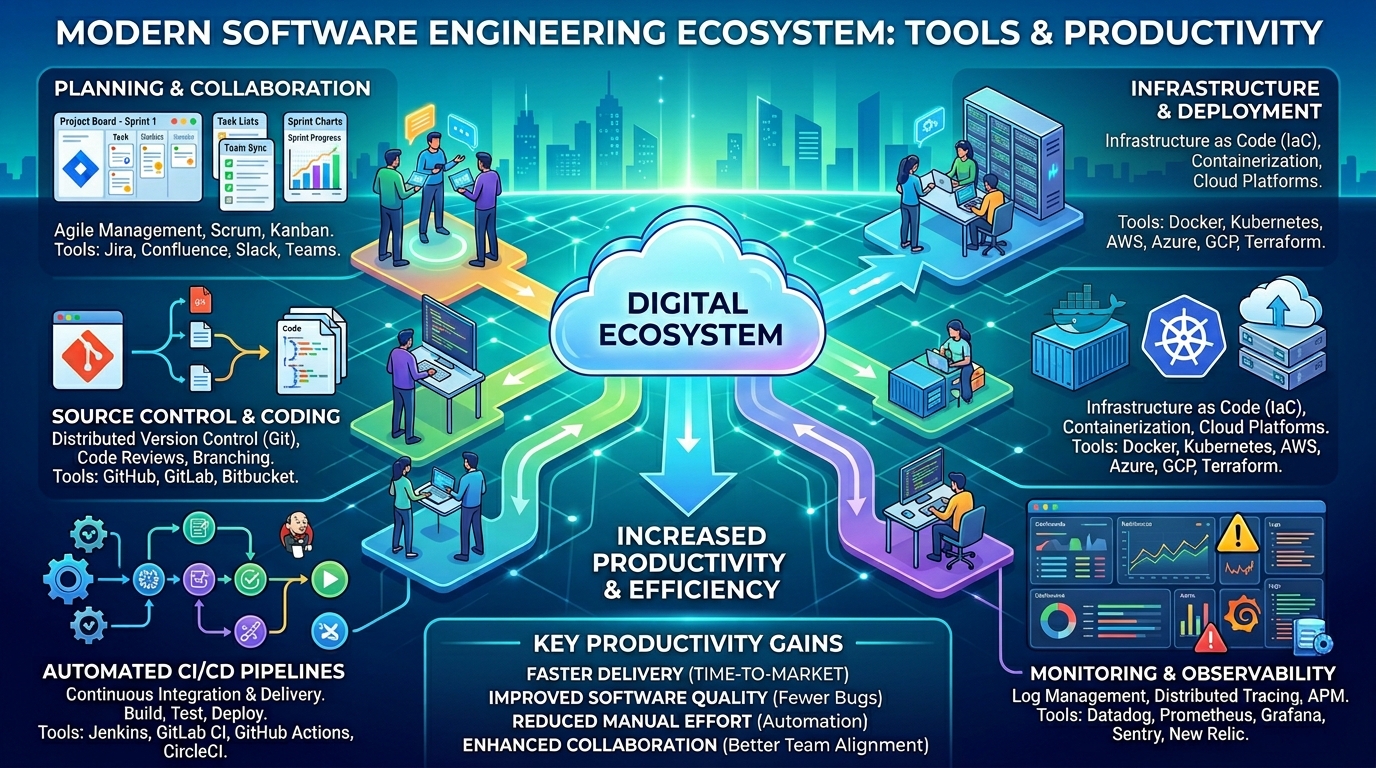
Tools & Productivity focuses on the technologies and systems that improve developer efficiency and streamline workflows in software engineering. These include version control systems, CI/CD tools, monitoring platforms, cloud environments, and development frameworks that simplify complex engineering tasks. These tools reduce manual effort and allow developers to focus on building features instead of managing processes.
Productivity systems also improve collaboration between teams by enabling structured workflows and automated tracking of changes, deployments, and performance metrics. In modern engineering environments, these tools are essential for maintaining speed, consistency, and scalability across projects. Mastering them is as important as understanding core programming concepts because they directly impact real-world development efficiency.
FAQs
What is ByteEngineTech focused on
ByteEngineTech focuses on real-world software engineering topics including system design, DevOps practices, backend systems, and productivity tools used in modern tech companies
Why are these categories important in software engineering
These categories represent the complete lifecycle of software development from architecture design to deployment and operational efficiency in production systems
Is ByteEngineTech theoretical or practical
It is primarily practical and focuses on how real production systems are designed, deployed, and maintained rather than only theoretical concepts
Who should learn from ByteEngineTech content
It is useful for beginners, intermediate developers, and IT professionals who want to understand modern engineering workflows and scalable system design
Does this content help in real-world development
Yes, the concepts directly apply to real software engineering roles where scalability, automation, backend systems, and productivity tools are essential
Conclusion
ByteEngineTech represents a complete modern software engineering ecosystem built around four core pillars that define how today’s digital systems operate. These areas work together to create scalable, efficient, and production-ready applications that meet real-world demands. Understanding this structure helps developers think like engineers rather than just coders and prepares them for building robust systems used in modern technology environments.