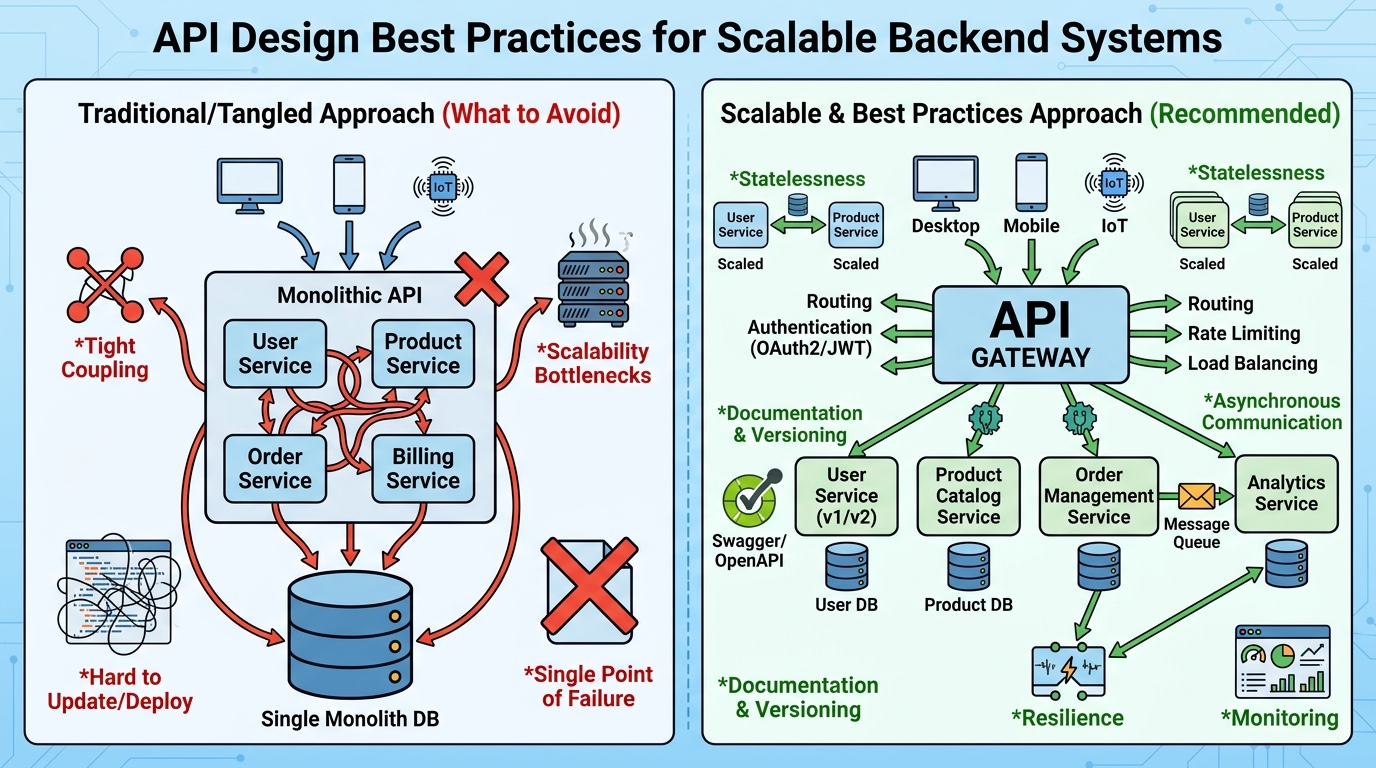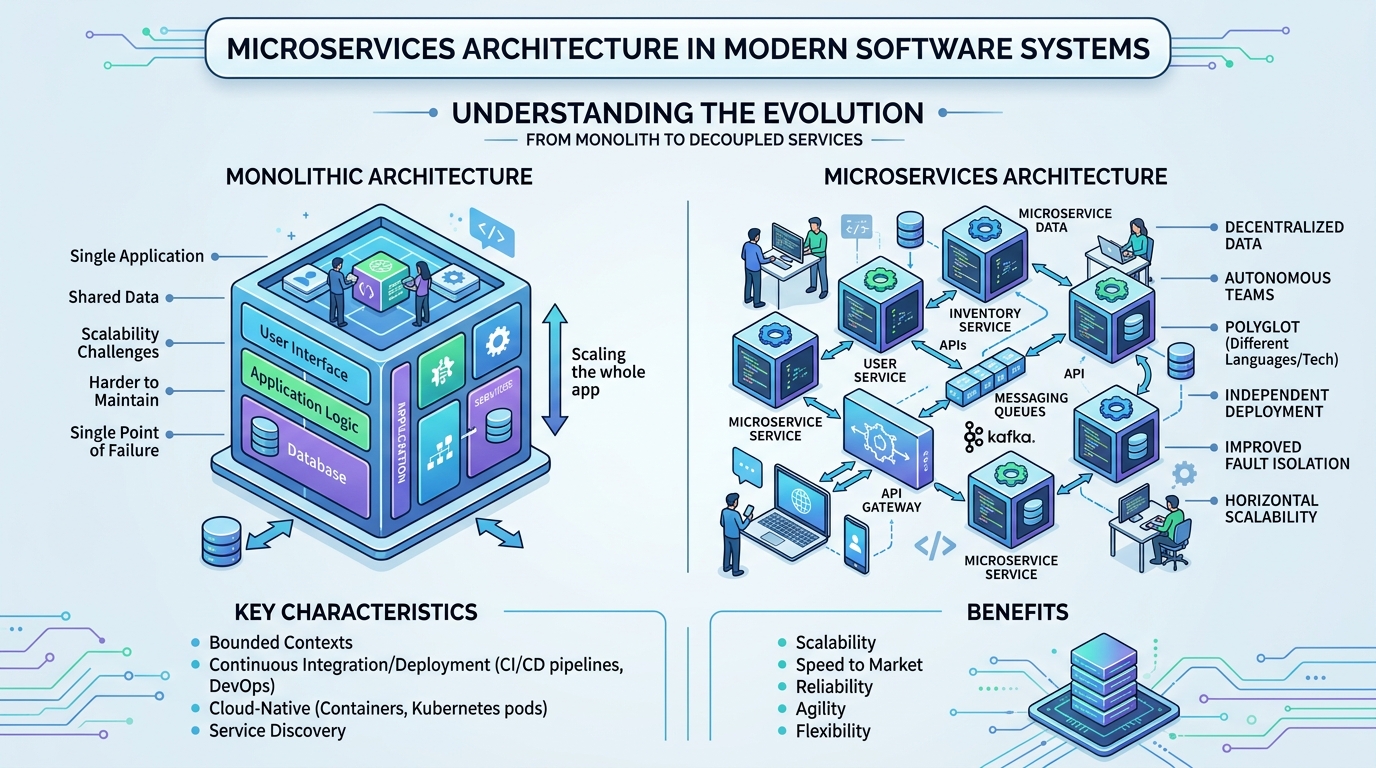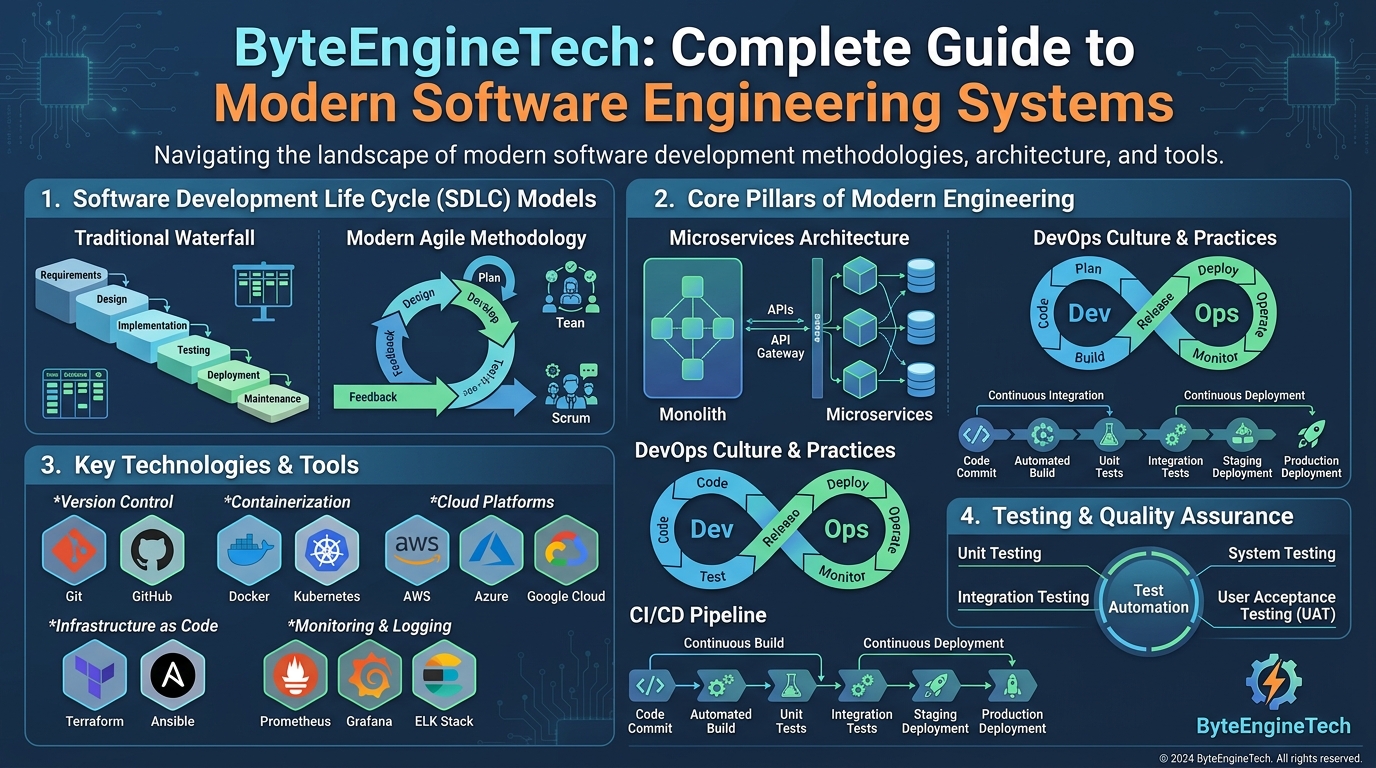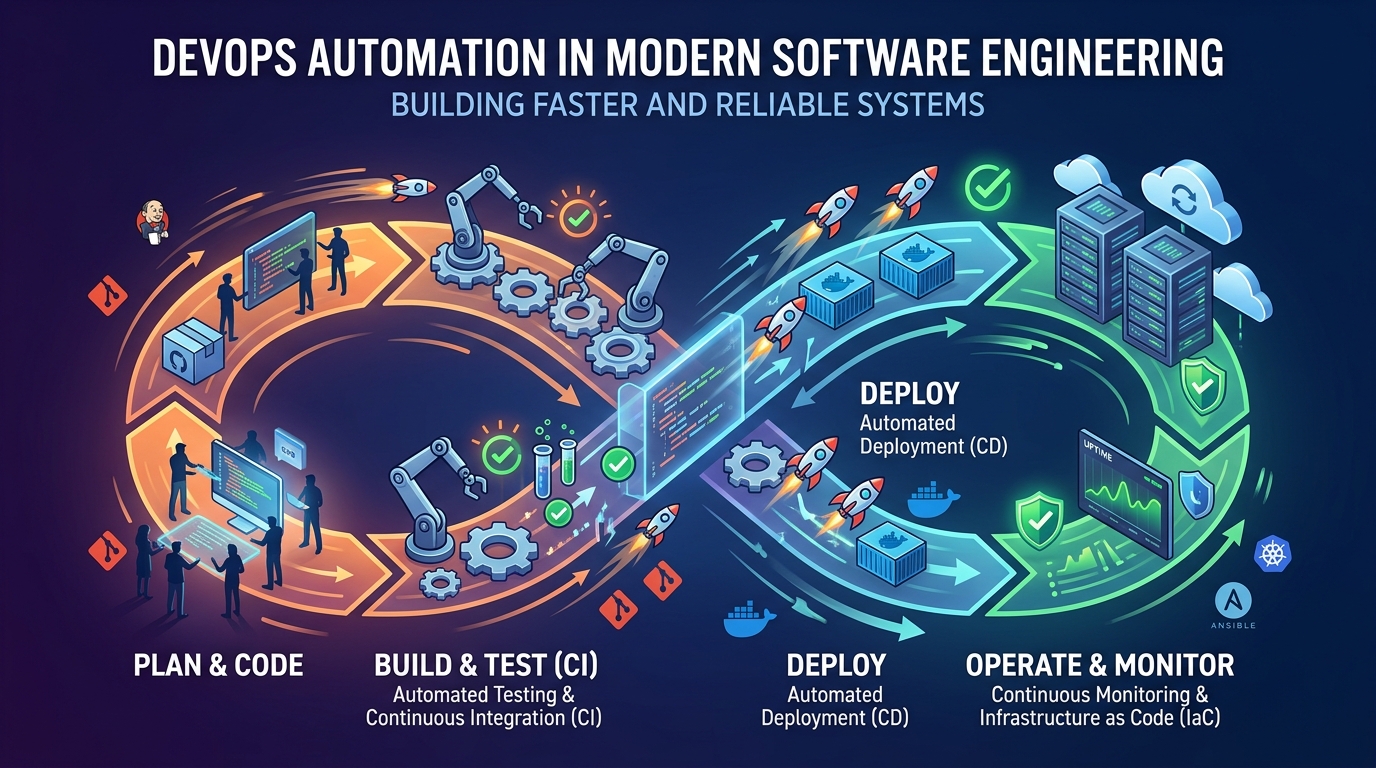

DevOps automation is a modern software engineering approach that connects development and operations into a single streamlined process. It focuses on automating software building, testing, deployment, and monitoring so that teams can deliver applications faster and with fewer errors. In today’s production environments, automation is not optional anymore, it is a core requirement for building scalable and reliable systems that can evolve continuously without breaking stability.
CI/CD Pipelines and Continuous Integration
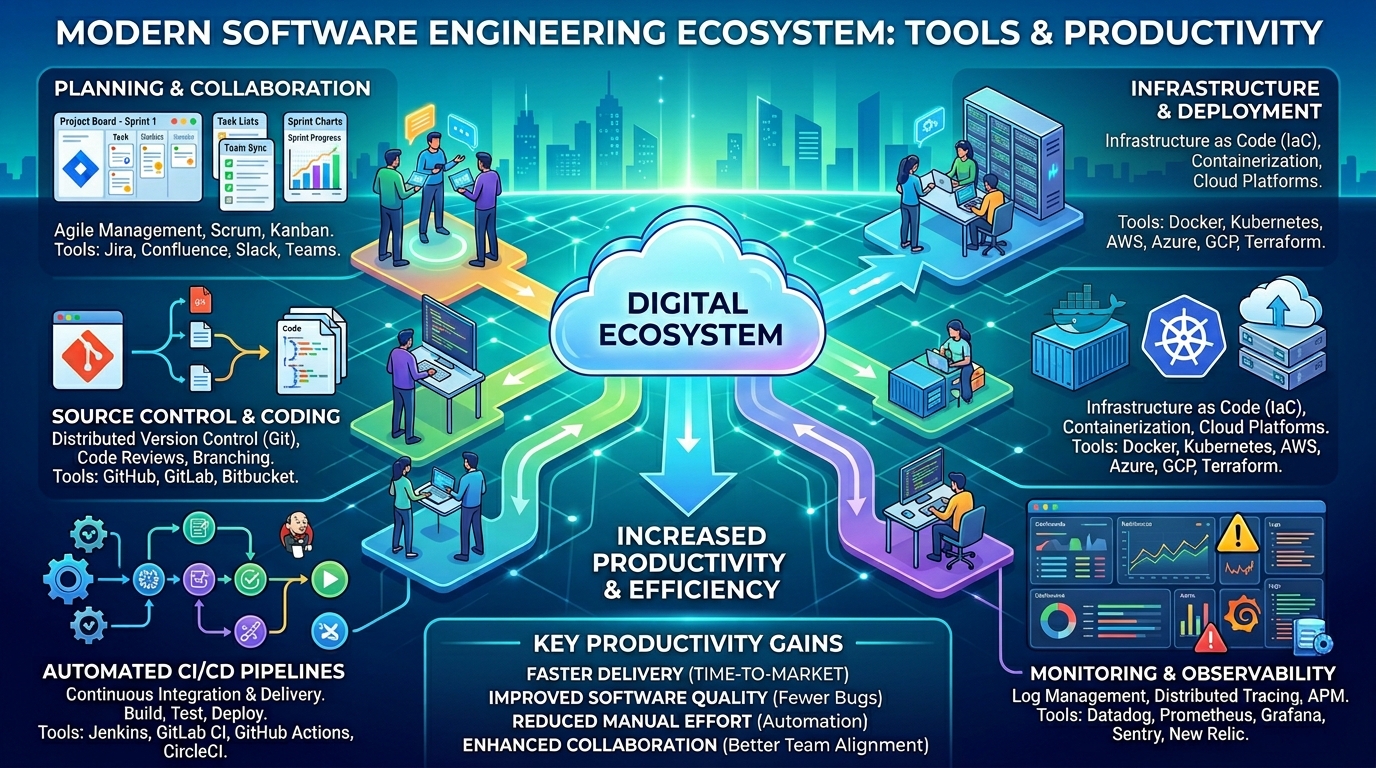
Continuous Integration and Continuous Deployment pipelines are the backbone of DevOps automation. These pipelines ensure that every code change is automatically built, tested, and prepared for deployment without manual intervention. This reduces delays and ensures that software is always in a deployable state.
CI systems also help detect issues early by running automated tests whenever new code is added. This improves software quality and prevents broken code from reaching production. By integrating code frequently, teams reduce integration conflicts and maintain a smooth development flow across multiple contributors.
Infrastructure as Code and System Consistency
Infrastructure as Code is a practice where system infrastructure is managed using code instead of manual configuration. This includes servers, databases, networking, and cloud resources that are defined in scripts or configuration files. It allows teams to create, modify, and replicate infrastructure quickly and accurately.
This approach ensures consistency across development, testing, and production environments. Since everything is defined in code, systems can be version-controlled, reviewed, and reused. This reduces human errors and makes infrastructure management more predictable and scalable.
Automated Monitoring and System Observability
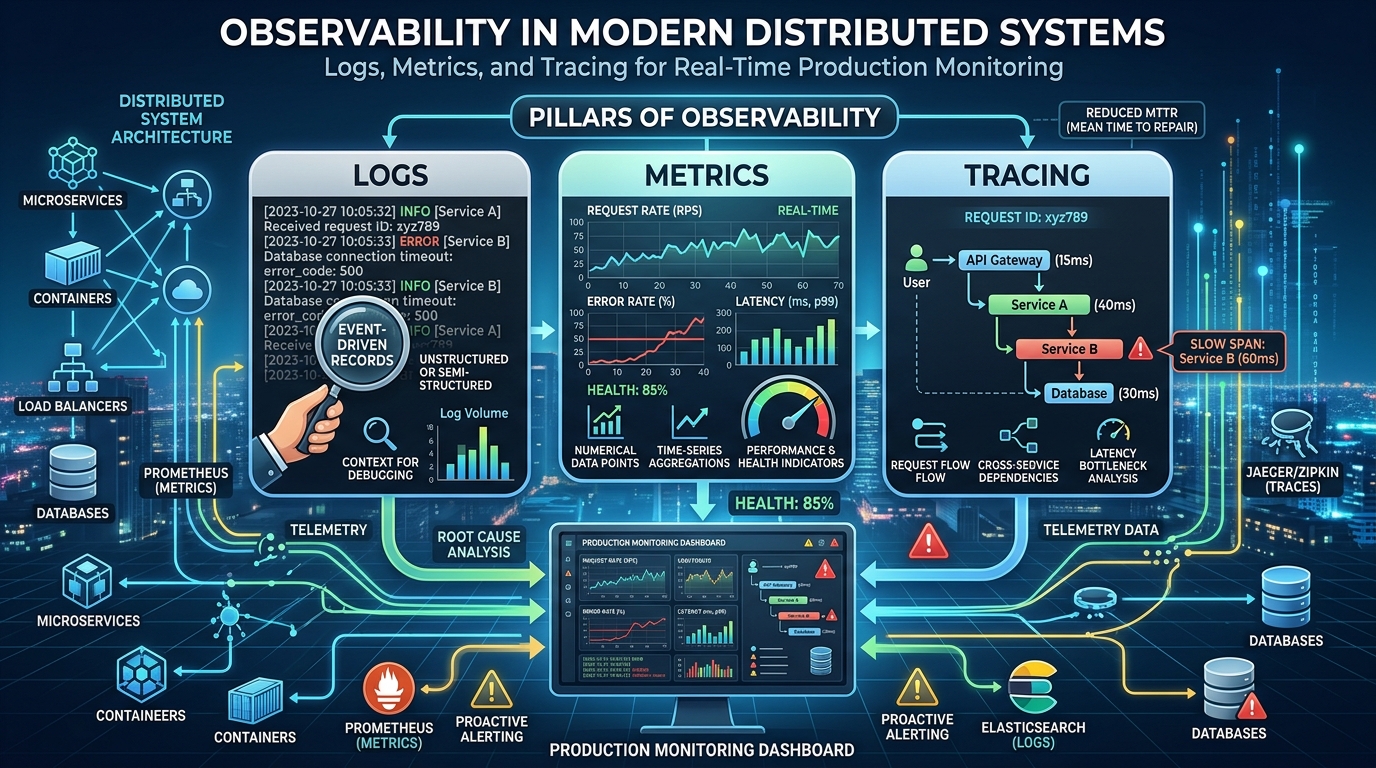
Monitoring is a critical part of DevOps automation because it ensures that systems remain healthy after deployment. Automated monitoring tools track system performance, error rates, resource usage, and response times in real time. This helps engineers detect problems before they impact users.
Observability goes beyond basic monitoring by providing deep insights into system behavior. It allows engineers to trace issues across services and understand the root cause of failures. This improves debugging speed and helps maintain high system reliability in complex distributed environments.
Deployment Automation and Rollback Strategies
Automated deployment systems allow software updates to be released quickly without manual steps. This reduces deployment time and ensures that new features reach users faster. Deployment automation also reduces human mistakes that often occur during manual releases.
Rollback strategies are equally important because they allow systems to revert to a stable version if something goes wrong. This ensures that failures do not affect users for long periods. Together, deployment automation and rollback systems create a safe and efficient release process.
Frequently Asked Questions
What is DevOps automation
It is the process of automating software development and IT operations tasks such as testing, deployment, and monitoring.
What is CI CD pipeline
It is an automated workflow that builds, tests, and deploys code changes continuously to ensure faster and safer releases.
Why is Infrastructure as Code important
It allows infrastructure to be managed using code, making systems consistent, scalable, and easy to replicate.
What is system observability
It is the ability to understand system behavior through logs, metrics, and traces to detect and fix issues quickly.
Why is deployment automation useful
It speeds up software releases, reduces manual errors, and ensures smooth and reliable updates.
Conclusion
DevOps automation plays a crucial role in modern software engineering by connecting development, testing, deployment, and monitoring into a fully automated workflow. It helps teams build faster, more reliable, and scalable systems while reducing manual effort and operational risk. As software systems continue to grow in complexity, DevOps automation becomes essential for maintaining speed, stability, and continuous delivery in production environments.